Saturday, August 30, 2014

The Tour de France: Normandy

France has a rich history, and its past has shaped it, region by region.  Normandy’s history begins with the Vikings, and has most notably been recognized as the stage of many important battles of World War II.  Aiming to please the history buffs of the family, we left behind the seaside luxe of the South of France and made our way to the rustic and once-war-torn countryside, exploring the winding farmland and wave-crashed coast, traversing the paths of farmers, cyclists, pilgrims, and war heroes.


Itinerary
We flew from Nice (NCE) to Paris (CDG) on Air France.  Upon arrival in Paris we picked up a rental car from Budget, and made our way for Normandy.  We stayed for three nights at the Adagio Aparthotel Caen Centre, in the city of Caen.  On our first day in the region, we arrived in the late afternoon, so we stayed and explored the city of Caen.  On our second day, we drove out to Mont St. Michel before returning to Caen for the evening.  On our third day, we drove to the beaches of Normandy, visiting the American WWII museum, cemetery, and German cemetery, before returning to the Caen area for the evening.  We spent one last night in Caen before driving back to Paris for part three of the Tour.

Day 1: Arrival in Normandy
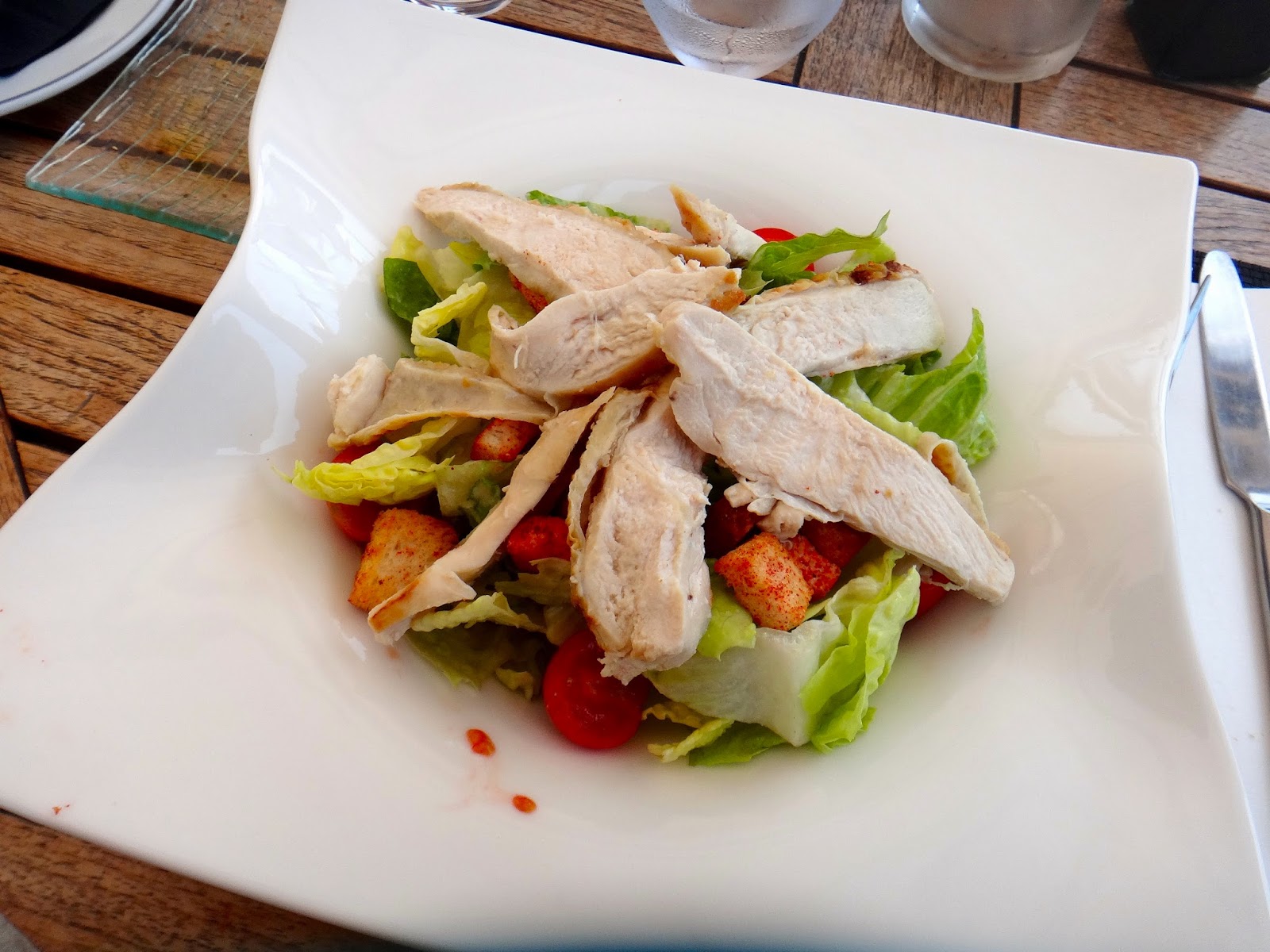
After an hour long flight and a wait for our rental car, we were on our way to Normandy.  It is about a three hour drive from Paris to Caen, the city in which we stayed.  We thought we were back in LA when we spent an hour on the road and barely traveled ten miles.  We decided to let the traffic pass and stop on the outskirts of Paris for lunch.  We chose Café Balthazar in the Saint Germain area of the city.  Refueling ourselves with salads and lots of bread, we hit the road again, finally passing the accident that held us up for so long.  After we got out of Paris, it was smooth sailing through the French countryside to Normandy.  


We continued our journey westward, driving through green pastures with grazing cows, cylindrical hay bales, and stone cottages. It was late afternoon when we arrived in Caen, later than we had expected to arrive because of the heavy traffic outside of Paris; nevertheless, we made the most of our evening in Caen.

Upon arriving in Caen, a small city in the Normandy region with rich WWII history, that served as a central location between all of our “must see” attractions, we checked into our apartment style hotel.  After settling into our "aparthotel", we walked around the city to get our bearings and to stretch out our stiff legs. We strolled along the narrow canal on Quai Eugène Meslin, eventually crossing one of the few bridges that displayed flags from hundreds of different countries to explore the other side of the canal. The streets, lined with somewhat modern boutiques and restaurants, were quiet, except for the occasional car that zoomed past us; it was probably quite the opposite about seventy years ago when bombs disrupted the tranquility of the city. We managed to see one original building, a cathedral splotched with ash and covered in aging stone, a reminder of the city's past.

Along with the change of region in France came the change in our means of eating dinner. We decided to put our aparthotel's kitchenette to work by cooking up some spaghetti and meat sauce that we purchased at the local Carrefour grocery store. It was a delicious way to end an eventful day and to fuel up for our next day’s adventure to Mont Saint-Michel.


Day 2: Mont St. Michel, the Real Tour de France, and the Caen WWII Museum
The next morning we were up at the crack of dawn, ready for a full day out.  We ate breakfast in our apartment, with food we bought from the Carrefour the evening before, and set out for a drive through the countryside, to Mont Saint-Michel, an abbey built onto an island surrounded by an ever-changing tide. What should've been a straight shot out to Mont St. Michel was actually a severely detoured route, and we soon learned we chose to visit the area on the same day that the Tour de France was scheduled to pass through it.  We made it to the Mont St. Michel visitor center, where we were forced to park, because the Tour de France’s finish line and media center had taken over the main parking lot. 


As we walked towards the abbey, we heard loud cheering and figured we were crossing the race course.  We stumbled upon the three-kilometers mark along this time trial leg's course, where we joined fans of all nationalities in anxious anticipation of the cyclists' speedy flybys. Everyone cheered as the first set of gendarmerie, or police, cars approached, but the next set of vehicles weren't cyclists. Trucks and floats bearing the names of tour sponsors drove by, the drivers and passengers tossing free samples and other knick-knacks to the crowds. The battle to catch these items was about as fierce a competition as the Tour de France itself: people shoved us out of the way just to get their hands on a pack of Bic pens or the more desirable package of Madeleine cookies.  It’s a surprise helmets aren’t a requirement for spectators!


After being bombarded with free swag from the sponsors, and watching the first few bicyclists sprint their way through the time trial course, we finished the walk over to the fortress that is Mont St. Michel.  By the time we finally reached it, it was lunch time. From our research, we discovered that the specialty in Mont St. Michel is their fluffy omelettes, which date back to when the now tourist attraction was a monastery.  We had heard about La Mère Poulard, the restaurant at the entrance of the peninsula, famous for the omelettes and crêpes that have been served since the late 1800s to pilgrims traveling through the area. Back in the day, the chefs would stuff filling food into the crêpes and eggs, so the pilgrims could carry and consume hearty meals with ease during their journeys. Just about as large as the crêpes and omelettes themselves were the prices and wait to be seated, so we chose a more economical alternative called La Confiance, just a few cobblestones down the street. The restaurant had those famous omelettes, which turned out to be a pillowy egg with meats and foam oozing out the sides, and crêpe "meals" that came with an entrée and a dessert crêpe. It was a charming restaurant with historical flair: stone walls, original paintings, a bar, and a kitchen where diners could watch the chefs whisking eggs and making crêpes. 


After lunch, we started our hike up to the entrance of the abbey. One would never realize this from a distance, but the peninsula has a bustling town nestled inside of its stone walls, with winding cobblestone streets, gift shops, and bed and breakfasts. The architecture seemed to combine Alpine village and French countryside in one area. 


We reached the entrance to the abbey, and to our dismay, we found out that it was closed due to a worker's strike. Our disappointment was short-lived when we caught a glance of the spectacular views from the top. We could see the English Channel stretching for miles, an unusually beautiful gray, silt-covered sea, as well as small marshes that hugged the peninsula. Later on in the day, these marshes would be covered in water when the high tide would roll in. With our cameras full of photos, we returned to the bottom, bidding the tiny town adieu and wandering into the finish area of the bike course where we were again bombarded with freebies, saw the awards pedestal, and watched interviews with the exhausted cyclists.

After an eventful day along the coast, we drove back to Caen to visit the Mémorial de Caen, a World War II museum, to give ourselves a preview of what we would be seeing the next day: the D-Day Beaches.  This museum is fantastic for any history buff: the exhibits focus on the war as a whole, including information about pre-war economics, the rise of fascism, the Holocaust, each Allied nation's role in the war, and battles of the war not exclusive to just D-Day.

We concluded our day with dinner in a large plaza in Caen, stopping at Au Vélocipède, a pub style restaurant with ample indoor and outdoor seating.  We gobbled up our pizzas and salads (and the obvious basket of bread), and even managed enough room for a chocolatey dessert (we’re not sure what it was, but it was delicious).  With that it was back to our apartment for another good night’s rest; we had another early morning ahead of us.


Day 3: World War II Sites, Chocolate, and Apples
This day started much like the one before had: up early, breakfast in our little kitchen, and on the road through the countryside headed west.  This time we were headed for the Beaches of Normandy, with our first stop at the American WWII museum and cemetery.  A somber place, though a beautiful display honoring the American soldiers of the war.  We spent the morning in the museum, where we were transported to the day of the battle with vivid descriptions of the battles, audio clips of soldiers and gunfire, and an emotional film that pays tribute to the soldiers who sacrificed their lives in such crucial invasions to recapture France from Nazi occupation. After brushing up on our history, we wandered out to the white cross-covered cemetery grounds high on the cliffs before driving down to the rough water where history was made years ago.  


We made it to Omaha Beach and Utah Beach, where the Americans first hit French soil on that historic day.  There are smaller monuments at both beaches, but are relatively empty compared to the museum.  We ate lunch at L’Omaha, a converted cottage in Omaha Beach, escaping the cold weather outside.  Enjoying our bread, salad, and fish, we overlooked the exact spot where brave troops sacrificed all they had for their country.  


After lunch we braved the relentless winds and collected sand from Omaha Beach and explored Utah Beach, where we checked out a real war bunker, some tanks, and some planes that weren't available at Omaha Beach.  We then stumbled upon some dense farm country and had a little too much fun with the giant hay bales. 


For our final World War II exploration stop in the Normandy region, we made our way to La Cambe German War Cemetery; we were interested in seeing a memorial that honored an "Axis Power" nation. Located in the city of Bayeux, it is a cemetery covered with dark brown crosses that mark the final resting place of many Nazi soldiers. In the center of the cemetery was a statue of a cross flanked by a man and a woman that was elevated on a grassy hill. The man and the woman watch over all of the graves, their faces clouded with loss and mourning.


When we had just enough history for one day, we ventured to a different kind of attraction- a chocolate factory in Bayeux. At Chocolaterie Drakkar, we took a short tour of their chocolate museum, learned about how chocolate is made, and even enjoyed a few samples of their specialties. 

Afterward we went into Bayeux’s city center, in the middle of an area of the Normandy region famous for its apple cider. Bayeux itself is a quaint, traditional French town. Unlike Caen, most of the original buildings are still standing, and they offer the same services that have kept them in business for decades, such as shoe repair and horse-drawn carriage services. The town's streets were made of cobblestone, and the old, stone buildings decorated with brightly colored flowers below the window sills stood alongside small canals, the original water wheels still turning. Perhaps one of the most prominent sights in Bayeux is its cathedral, boasting stunning, Romanesque and gothic architecture, and inside paintings and statues honoring some saints. 


For dinner we chose Le Marsala, a quaint, family-owned restaurant that served chicken cooked in an apple cider sauce with frites (french fries) on the side. We watched the owner and his son cook our meal in the visible kitchen, equipped with a traditional pizza oven, their passion for food shown through their smiles and enthusiasm. The waitresses, the wife and daughter of the owner, made us feel at home.  Maybe it was the food itself or even the love and passion put into its preparation that made it one of the best dinners we have ever eaten. After capping the delicious dinner off with gelato, we returned to Caen for the evening to rest up for our drive back Paris in the morning.


Tips

  • Rent a car if you plan to spend a few days exploring the region.  This way, you are free to see whatever you wish; you won’t be bound to a tour company’s itinerary
  • We'd recommend staying in the Normandy region if you want to explore this area of France. Many people designate one day to travel there on their vacation to Paris, but if you can swing it, stay in Normandy. There is so much to see and do, and you don't want to feel rushed on your journey
  • Find a hotel in a city central to all the areas of the region you plan to visit
  • Even if you visit in the summer, pack warm clothes, because the weather on the coast can get cold, wet, and windy very quickly
  • Just like in the Riviera, splurge on dessert, you won’t regret it
  • Get to the sites early, before the long lines of tour busses do.  No one ever liked a feisty crowd full of tourists!
  • When you eat out in this region, try to find the places that serve up the local specialties (as goes for everywhere, but it seems that every town in Normandy has its own delicacy)
  • If you drive out to Mont Saint-Michel, park your car accordingly. It depends on the time of day when you go. One of the parking lots is flooded over when the tide rolls in, so if you plan on spending the entire day there, make sure to park in a safe area. 
  • Wear comfortable shoes to Mont Saint-Michel. It could be a long walk from the parking lot, and you'll be hiking a cobblestone walkway up to the abbey

Tuesday, July 29, 2014

Le Tour de France: 3 Days in the French Riviera

In the Summer of 2013 we ventured to France, meandering our way through a few of the different regions.  We began our “tour” in the South of France, and managed to explore just about every inch of the area that is humanly possible in three days.  Growing up in a beach town of our own, we sought out to discover what made these ones so different, so luxurious, so famous.  For centuries, wealthy and royal Europeans traveled to the Côte d'Azur to enjoy its breathtaking views and scenery, to swim in the refreshing waters of the Mediterranean, and to just relax in luxury.  It took us planes, trains, busses, cars, and our feet to cover as much ground as we did.  Join us as we take you on our grand tour of our experiences of the vacation traditions of the South of France.


Itinerary
To kick off our "Tour de France", we flew on United Airlines from Washington Dulles International Airport (IAD) to Paris's Charles de Gaulle Airport (CDG). From there, we boarded an Air France flight bound for Nice Côte d'Azur Airport (NCE). A bus brought us to the city center, near Le Meridien Nice, the beachfront high rise that we called home for our three days. We spent our first day walking around Nice, exploring its notable landmarks and charming seaside communities. On our second day we took to the beach, where we basked in the sun until we took a bus to Cannes for dinner.  We spent our final day in Monte Carlo, where historical landmarks meet modern wealth, before taking the train back to Nice and boarding a flight to Paris for part two of our adventure.  

Day 1: Nice
After three flights (one a Transatlantic red-eye), missing our hotel's bus stop, and dragging our luggage through Vieux Ville Nice (Old Town of Nice), our jet-lagged bodies had finally made it to our beachfront hotel, Le Meridien Nice. The main goal of our first day was to keep ourselves from falling asleep- that jet lag was hitting us hard. After arriving at Le Meridien, we made our way to lunch at La Terrasse, the hotel’s rooftop restaurant overlooking the breathtaking, turquoise waters of the Mediterranean Sea.  This is was the moment we had long awaited: our first taste of genuine French bread. We especially appreciated the boost from the carbs, as we enjoyed our salads (salad Niçoise is the specialty!) and smoked salmon with toast.  


We weren’t sitting for long before our heads became heavy, so we quickly finished and made our way to the Promenade des Anglais, Nice’s version of a beachfront boardwalk. The wealthy Brits constructed the promenade for themselves in the 1700s to take strolls with a stunning view during their vacation to the French Riviera. Many people walked, ran, or even roller bladed past us as we admired the view of the sea and the beach clubs that dotted its shoreline.


Walking on the promenade, we stumbled upon the iconic Hotel Negresco, which had been sitting on its beachfront Niçoise property for one hundred years. The famous hotel was built for Nice's wealthiest visitors, then was converted into a hospital during World War I. It is now, again, a luxury, five-star hotel with gorgeous exterior and interior art and architecture. We loved walking inside, sitting in all the vintage chairs, imagining just what European elites graced the lobby over the past century, and enjoying the not-so-historic air conditioning. 


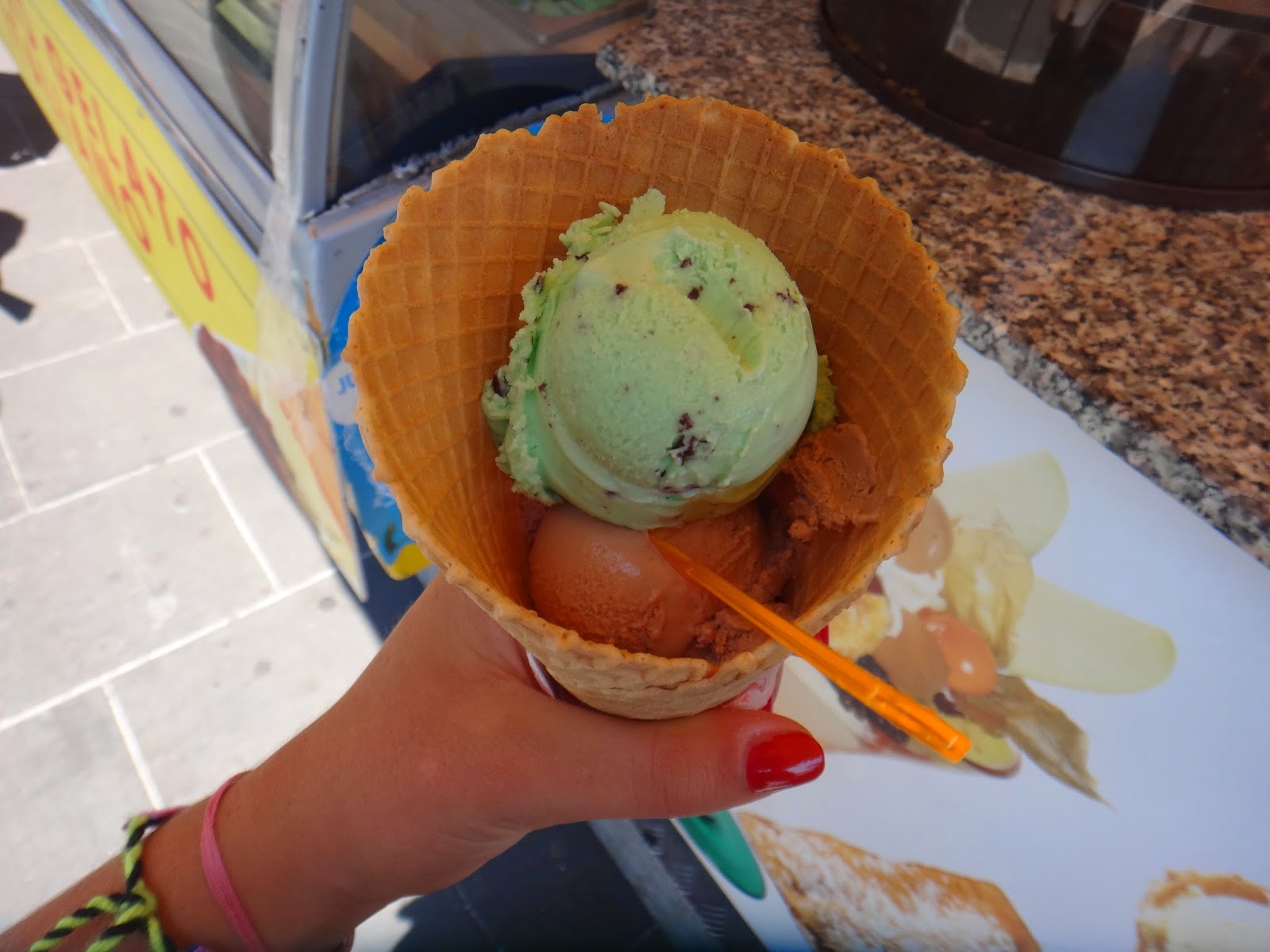
 After nearly falling asleep in Hotel Negresco, we decided we needed another energy boost, this time at Gelateria Pinocchio.  Funny story- from our research we found that the famous Niçoise gelato comes from Fenocchio Glacier, actually in Vieux Ville Nice, and our exhausted minds led us to believe that Gelateria Pinocchio was just that place! Well played, Pinnochio, well played. Though we never actually got that “world famous” Fenocchio gelato, gelato is gelato, and you can't go wrong with it served anywhere in Nice, which was once an Italian city.


After we got sugar boost from the gelato, we roamed away from the Promenade des Anglais to the St. Nicholas Russian Orthodox Cathedral. This cathedral definitely stuck out like a sore thumb, its onion-shaped domes and golden accents separating it from its Mediterranean-style neighbors. It was built for Tsar Nicholas II, so that he and his family could attend services during their vacations to Nice. We spent our time walking the grounds and planned to check out the inside, if it weren’t for our inappropriate clothing.  Lesson learned: ladies, DO NOT wear shorts or a tank top if you plan on entering the Cathedral.  A dress will do just fine, as long as your shoulders are covered!  If you’re a history buff or love Russian architecture, put the cathedral on your list!


Rested and ready to hit the town again, we made our way over to Vieux Ville Nice to see the open air market and dinner scene.  If you plan on doing any souvenir shopping in the city, this is where we recommend you do it.  You will find all sorts of different stores with something sure to please you, and every one of your family and friends back home.  This is also where you will find the most local flair.  The majority of the restaurants were located in a cobblestone courtyard surrounded by mustard-yellow, Mediterranean-style buildings. The kitchens and some seating were on the edges of the courtyard, while the middle was lined with red, white, blue, and yellow striped tents for outdoor seating. There were so many choices in restaurants, that we felt a bit overwhelmed, but we were in one of the best dining locations in the world, so we knew that we couldn't go wrong.  We chose La Storia for dinner, and we again were in awe of Nice’s famous bread, olives Niçoise, rosé, and people watching.  We scarfed down more carbs: the restaurant’s famed pizza, and fresh fish before treating ourselves to a pot of chocolate mousse.  


We decided we needed another long walk to settle our carbolicious dinner, a cultural norm in the Mediterranean.  We walked up to the Monument des Morts, a memorial built into the face of a small cliff that honors the dead from World War I. The fortress-looking sight is perfect for watching the sunset, with views of both sides of the city.  We continued walking around the other side of the monument, down into the port side of the town.  We wandered through the marina  full of ferries and mega yachts until it was dark, and then made our way back to Le Meridien, ready to hit the hay. 


Tips
  • When walking on the Promenade des Anglais, watch out for roller bladers! They can be crazy!
  • Eat gelato at least once; Nice is famous for it.
  • Visit the Monument des Morts for scenic views of Nice, and the best spot to watch the sunset
  • If you decide to take a bus from the airport to your hotel, make sure you know where your hotel is located. In order for the bus to make a stop, the passenger must press a button to alert the driver when to pull over. We passed our hotel, not realizing how the system worked, and had to drag our luggage over cobblestone in the hot sun while wearing sweatpants. Yeah, not exactly fun. 
  • If you plan on going to the Russian Orthodox Cathedral, you cannot wear shorts if you want to go inside of it. Ladies, if you wear a strapless dress or shirt, you must cover your shoulders before going inside. They do provide you a shawl if you don't have anything to cover your shoulders. 

Day 2: Ruhl Plage and Cannes
Our second day on the French Riviera started with Le Meridien’s breakfast buffet.  We were treated to a true French breakfast: bread and pastries galore, with meats, cheeses, fruit, and the greatest modern European novelty: Nutella.  

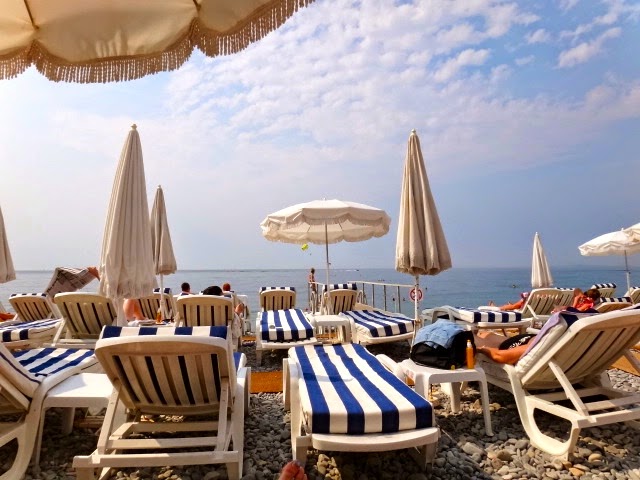
You must be surprised that we haven't yet set foot on one of the Côte d'Azur's beaches! Be surprised no more! After quite the satisfying meal, we made our way to Ruhl Plage, the beach club across the street from the hotel, with which Le Meridien Nice has a partnership. Most of the beach clubs have partnerships with one of the hotels in Nice, and offer a discounted admission rate for the hotel’s guests.  With the entry fee, you get lounge chairs, towels, an umbrella, and access to the beach and the amenities of the club (clean bathrooms!). The beaches in Nice are rock, not sand, so we HIGHLY recommend that you spend your beach day at a beach club, unless you want to channel your inner Flintstone and lie on rocks all day. We spent the morning relaxing in the warm sunshine, jumping off the club’s small dock, and swimming in the refreshing Mediterranean Sea. 


Somehow we were hungry for lunch, and we decided to eat at Ruhl Plage’s restaurant.  The bread again did not fail to impress, and we enjoyed tagliatelle pasta with fruits de la mer (shrimp and squid), caprese salad, melon with Parma ham, and an absolutely delicious bowl of berries and crème fraîche.  We also saw an older couple, whom we presumed were locals, enjoying strawberries and champagne- c'est beau, la vie! After lunch, we spent the rest of the day on the beach and in the water, before returning to the hotel to freshen up for our night out! 


After a day filled with sunbathing and swimming in the sea, we decided to venture westward to Cannes, the city where celebrities grace the beaches for the annual film festival. It has a similar appearance to Nice in its buildings' architectures and beaches, but it has an even more vibrant night life, with loud music and restaurants open late. We decided to take the regional city bus to Cannes.  After two hours and nearly falling to our deaths a dozen times (those drivers are crazy), we finally reached Cannes.  We walked along the water of Le Vieux Port, imagining owning the massive yachts, and taking in the Palais des Festivals et des Congrès, where the festival is held.  

We ended our walk around town with dinner at Caffé Roma, a large, busy restaurant with neon purple lights and music blasting in the background. The energy was certainly plentiful, probably even in the early hours of the morning.  With more bread, stir fry, fresh fish, and a banana split satisfying our cravings, we were ready to head back to Nice.  We would have loved to stay our and experience the vibrant night life that Cannes has to offer, but we were planning on waking up early the next morning for our trip to Monte Carlo.


We ran into a few problems, however.  The bus that was supposed to take us back to Nice never showed up, so after waiting to no avail, we tried the train.  At the train station, no one was working the ticket office, and we were unable to buy tickets at the self-serve kiosk because our American credit cards did not have the “chip” that European cards do, and that the machines require.  With no other choice, we boarded the train and planned to purchase a ticket on board.  We found ourselves in Nice before a conductor ever came around to check our tickets, so we accepted our free ride home, and returned to our hotel for the rest of the evening. 

Tips
  • Wherever you're staying in the South of France, if you want to spend a day at one of the iconic beach clubs, which is highly recommended, try to stay at a hotel that has a partnership with one of the beach clubs. It is these partnerships through which you can get discounted admission.  Take full advantage!
  • If you're traveling to a different city along the riviera, and time is of the essence, take the train to your destination. They are constantly traveling to other cities, and the station in Nice is a short walk from most hotels. If you're traveling on a budget, a bus ride to nearby cities is the cheaper alternative to the train; however, the train is much more clean, modern, and reliable.

Day 3: Monte Carlo
On our third and final day in the French Riviera, we hopped on yet another train and took the 40 minute ride to Monte Carlo, Monaco. Another buffet breakfast powered our journey. Don’t bother bringing anything to keep you busy on the train-it is one of the most scenic rides we’ve ever taken! We picked up the train at the Gare de Nice-Ville, and traveled through seaside communities, where we were able to look out at the beautiful Mediterranean Sea from different perspectives. Our personal favorite view was the boats, quaint villages, and the gorgeous water along the coast of Villefranche-sur-Mer, a town to which we hope to return if we are ever able to go back to the Côte d'Azur. We arrived right in the middle of downtown Monte Carlo, at the Gare de Monaco-Monte-Carlo. The train station's walls are covered in marble, and when we stepped outside, we could see luxury cars for miles.


We arrived right around the time of the changing of the guard (11:50 AM) at the Prince’s Palace, so we made our way for that first.  The palace is up on a hill, and a bit of a climb, but the expansive views of the city, marina, and Mediterranean are worth the trek! The palace looked like a fortress with watchtowers and flags waving in the wind, dominating the hillside on which it stood. There is also a statue of François Grimaldi, the founder of Monaco, dressed as a monk. In the year 1297, he dressed this way, hiding some weapons, which he used to conquer the territory of Monaco. Since then, Monaco, with some minor bumps along the way, has been controlled by the Grimaldi family. 


While waiting for the ceremony, we lusted over (and of course took pictures with) the luxury vehicles parked in the plaza, took in the views, and tried to stay out of the already sweltering sun.  You’ll know the ceremony is about to begin when you see all the feisty tourists vying for a front row spot to watch.  If you’re REALLY dying to see the changing of the guard, find a spot early, because people tend to get crazy, and you’ll probably end up watching the ceremony through someone’s iPad screen. 

After the ceremony, we decided it was time to find lunch.  There are a bunch of thin, pedestrian only alleys behind the palace, full of gift shops with basic souvenirs, essentials for the casino, and memorabilia of the Monaco Grand Prix. We picked one and ventured down it, choosing a cafe, U Cavagnetu, so local that the wait staff only spoke very basic English (we appreciated the opportunity to practice our French!). The menu offered a combination of Italian and French cuisine, including pizza, escargot, salad, and a lot of wine and bread, of course. We enjoyed the break as we people watched and imagined what life would be like as Monegasque royalty.


After lunch, we wandered through the different streets, stopping in shops and trying to keep our feet out of the cobblestones.  We stumbled upon the Saint Nicholas Cathedral, the church in which most of the Grimaldi family is buried and has been married.  Nearby is also the Musée Océanographique de Monaco. Viewing the activity that goes on underwater didn't really tickle our fancy while we were in Monaco, but we were glad that we walked by the building because we were very much interested at looking above the water. The views of the Mediterranean Sea from the lookout points were simply impeccable. We walked along the Avenue Saint-Martin, which eventually led us down the hill to the harbor.  


If you’re looking for some inspiration for your next yacht investment, visit the harbor, or, like the rest of us, visit the harbor to dream about the yachts you wish you owned. Just about as awesome as the incredible views from the top of Monaco's hillsides are the sights on the bottom. Ferraris, Aston Martins, and Lamborghinis zoom through the streets across from three to five-deck yachts docked along the marina.  Take your time walking along the waterfront, it’s picturesque and has so much history! There were also statues and a mini racecourse that provided visitors a taste of the atmosphere when the Grand Prix rolls around each May. Even if this walk along the marina did not lead to the Casino de Monaco and the Hôtel de Paris, it is still worth it.


After falling into a state of depression when we realized that those yachts would never fall in our hands, we made our way up the hill to the Casino de Monte-Carlo and the Hôtel de Paris, pretty much directly across the marina from the palace and aquarium.  Parked in the plaza is just about every type of luxury vehicle the world offers, and we had a great time taking pictures with just about every one (thanks for the new car, mom and dad!).  We were dying to check out the inside of the Hôtel de Paris but were immediately shooed out by a security guard.  Apparently you have to be a guest of the hotel, because even privileged royalty like us couldn’t get in!  At least we were able to admire the polished Ferraris outside of it! We then tried our luck with the Casino.  You must be over 18 to enter the casino, and it is highly recommended that you dress nicely. They have a reputation to uphold!  Somehow we snuck in without paying an entrance fee, and spent a few minutes checking out the foyer.  No cameras are allowed inside, but what little we saw was beautiful: marble walls, floors, and pillars with ornate designs, truly fit for royals.   The outdoor area between the hotel and casino is also beautiful with its flower gardens and displays complete with a satellite-dish- looking mirror that reflects the casino, perfect for a unique photo.


At this point the heat was getting to us, but rather than stopping in the crowded Café de Paris, we walked back down the hill to the harbor to find a snack.  We stopped at the waterfront Chez Bacco “Le Kiosque” for some shade, thirst quenching drinks, and well deserved ice cream, perfect for overheating, jet-lagged travelers.  We also took this time to do some more people watching and to take in the wealthy seaside city, before returning to the train station and headed back to Nice.  

When we returned we were absolutely exhausted from our adventure in Monaco.  We relaxed at Le Meridien until it was time for dinner.  We decided to return to Vieux Nice for some final souvenir shopping, and our last  Niçoise meal, a toast to our wonderful three days in the South of France.  This time, we picked La Cambuse, right in the same plaza as La Storia, our restaurant from the first night.  Somehow we hadn’t yet had our fill of the french bread, and we scarfed down several baskets full.  We enjoyed every last sip of our rosé, and every last bite of our pesto soup, fish, and the largest, most delicious plate of profiteroles.  


We walked off our meal with one last trip to the fortress, taking in our final sunset in Nice. After, we hit the Old Town shops one last time. The shops in Vieux Ville Nice are also unique, high-end, and worth a look. We glanced at the windows of a nineteenth-century chocolate shop, La Maison Auer, as well as other shops that offered bags of Provence lavender and the famous blue and white china. Then it was back to Le Meridien for one more night before we took off on part two of our French adventure!


Tips
  • Wear nicer clothes during your days in this region.  Quite a few of the sights (casino, cathedrals, etc.) we visited have a dress code, and this isn’t Disneyland! The French have a high standard of living and expect tourists to be well behaved and well dressed.
  • Wear comfortable, yet fashionable shoes during the day.  There are a few hills that are covered in cobblestone, so you want to be comfortable, but you're also in one of the most luxurious destinations in the world, so look the part. We probably spent more money on bandages and blister treatments than we spent on food.
  • If you want to view the changing of the guard ceremony, check the time before you leave. Also, get there early, so that you can get a good viewing spot. It fills up pretty quickly.  
  • If you want to go into the gambling rooms at the casino, bring your passport. You must prove that you are over the age of eighteen.
  • Don’t hesitate to ask for more bread at meals.  You’ll need the carbs since you’ll likely be walking everywhere, and the bread in France is to die for.
  • Same goes for the pizza; this isn’t your typical New York slice.
  • Don’t be afraid to spend extra on dessert-we guarantee it will be delicious and calories don’t count when you're in France!
Experiencing the centuries-old tradition of vacationing to the South of France was truly unforgettable. The destination and the sights and activities that it offers may evolve over time, but the Côte d'Azur, the French Riviera, the South of France, or whatever you want to call it, will always be a timeless, must-see vacation destination.